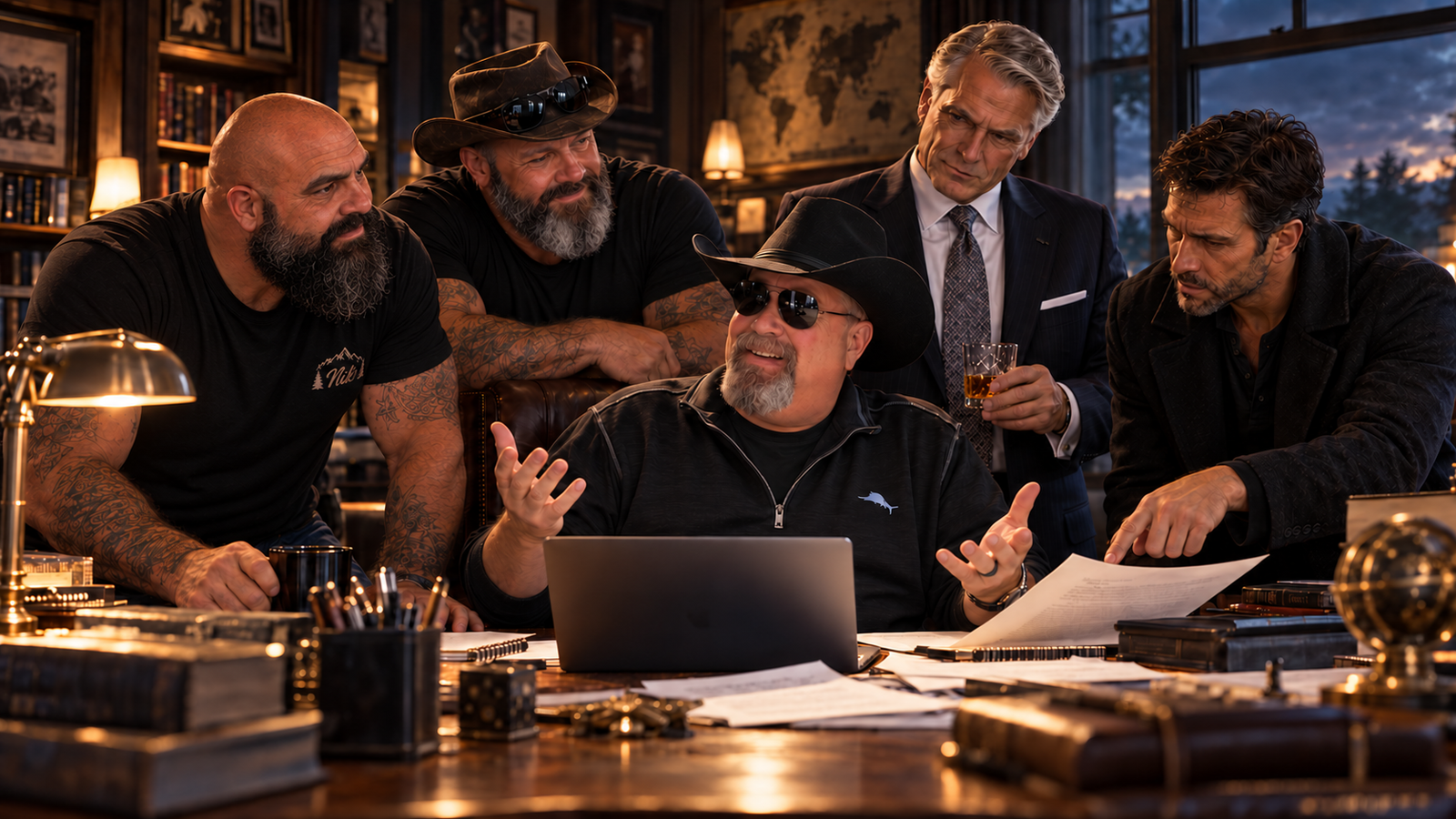
When I first sat down to write Programmed to Win, I had a pretty good idea of who Derrick Driver was going to be. I knew his personality, his background, and the kind of man I wanted him to become.
What I didn't know was everything I was going to put him through.
And as it turns out, neither did he.
I've never been much for outlining my novels. I generally start with a concept, an idea of where I want the story to go, and then I begin writing. Some authors carefully map out every chapter before they write the first sentence. That's never really been my approach.
I prefer to let the story show me the way.
Of course, sometimes that means the characters decide to take a different road.
When the Story Changes Genres
Even the type of story I'm writing has a tendency to change along the way.
Programmed to Win started as the concept for a political thriller. But as the story developed, medical science fiction began working its way into the plot. Before long, what started as a political thriller had evolved into something some readers might describe as a genetic manipulation political thriller.
That certainly wasn't a genre I had in mind when I first sat down to write it.
Then came The Cost of Killing.
What began as a continuation of Derrick Driver's story took on an entirely different personality. Revenge became a driving force, turning the second novel into more of a revenge thriller, with a side of global cabal conspiracy and an unexpected helping of personal growth.
I'm not sure there's a bookstore shelf labeled "Revenge Thrillers with Global Cabals and Personal Growth," but if there is, I might have found my niche.
The interesting part is that I didn't deliberately set out to cross genres. The stories developed that way because of what was happening to the characters and the decisions they were making.
Derrick wasn't the same man at the end of Programmed to Win that he was at the beginning. And by the time The Cost of Killing came around, his experiences had changed not only who he was, but the kind of story I was telling.
I suppose that's what happens when you let the characters help determine where the story goes.
When a Scene Takes an Unexpected Turn
One of the biggest surprises I've experienced while writing the Derrick Driver thriller series happened during The Cost of Killing.
I was writing a scene involving George Avail, a character whose role in the story I thought I understood pretty well.
Then something happened that I hadn't planned.
It wasn't until I was actually writing the scene that I realized where it needed to go. Suddenly, I found myself dealing with a situation I hadn't anticipated.
As the story continued, I even considered killing George off.
But then another possibility presented itself. One that hadn't occurred to me when I started writing. Suddenly, George had a different role to play, and the story began moving in a direction I hadn't envisioned.
I won't tell you what happened, because that would give away far too much of The Cost of Killing.
What I will tell you is that George survived because, as I continued writing, I discovered something more interesting to do with him.
And that decision ultimately helped shape Derrick's development as well.
That's what I enjoy about writing suspense novels without a rigid outline. Sometimes a character's future changes while I'm sitting at the keyboard.
And sometimes the character who was about to die turns out to have a much bigger part to play.
Supporting Characters Become Family
When I wrote Programmed to Win, the supporting characters were exactly that. Supporting characters in what was originally one novel.
But when I began writing The Cost of Killing, I realized I needed some of those familiar faces to continue the story.
By the time the series developed further, they weren't simply supporting characters anymore.
They had become family.
Each brought something different to Derrick's world. Their personalities, relationships, and individual histories began shaping the stories in ways I hadn't originally anticipated.
Two characters I particularly enjoy writing are Nik and Rich.
Both are based on friends of mine, and much of what makes those characters entertaining comes from the personalities of the people who inspired them.
Sometimes writing their dialogue feels less like inventing a conversation and more like listening to people I've known for years.
I think that familiarity helps bring them to life.
And in a series filled with political conspiracies, dangerous enemies, and people seeking revenge, those familiar personalities help keep the stories grounded.
Four Attempts to Find Four Kings
Of course, allowing a story to develop naturally doesn't always make writing easier.
Take The Four Kings, the third novel in the Derrick Driver series.
I knew I wanted to write the book. I had the concept. What I couldn't seem to find was the storyline that felt right.
So I started writing.
And then I scrapped it.
I started again.
And scrapped that version too.
By the time I finally found the direction I wanted, I had restarted the novel four times.
Four times!
There's probably something ironic about having to restart a book called The Four Kings four times.
But that's the downside of my approach to writing. Without a detailed outline, sometimes you head down a road that simply doesn't lead where you want to go.
When that happens, I don't spend a great deal of time trying to invent an elaborate explanation to justify a scene that isn't working.
I scrap it.
I'd rather start over than force a story in a direction that doesn't feel right.
Whether I'm writing a political conspiracy thriller or a story driven by revenge, I still believe the characters' decisions have to make sense. If the story doesn't feel right to me, I can't expect it to feel right to the reader.
Sometimes the Characters Get a Reprieve
Another interesting part of writing a series is discovering that readers may become attached to characters you never expected them to care about.
Tinker is a perfect example.
At one point, Tinker was on the chopping block. I'd considered killing him off as the story developed.
Then I learned he actually had fans.
That gave me a reason to reconsider his future.
It's an interesting position to be in as a writer. You create a character to serve a particular purpose in a story, only to discover that readers have formed their own connection with that character.
And sometimes, knowing that connection exists makes you reconsider what you had planned.
Of course, that doesn't mean every character is safe just because someone likes them.
But it might buy them a little more time.
Do the Characters Become Real?
After spending so much time writing Derrick Driver and the people around him, I do feel as though I know them.
I understand their personalities, their histories, and how they're likely to react when something goes wrong.
That doesn't mean I consult them when I have a problem in my own life.
I generally reserve their advice for the mysteries I'm writing.
And considering some of the situations I've put Derrick through, that's probably a good thing.
But knowing the characters makes it easier to recognize when a scene doesn't fit. If someone does something that feels completely out of character, I have to ask myself whether I've discovered something new about them or whether I've simply written something that doesn't belong.
Sometimes the answer means changing the scene.
Sometimes it means changing the story.
And occasionally, it means starting an entire novel over again.
The Story Is Still Being Written
When I created Derrick Driver, I couldn't have imagined every situation he would face, every person who would become part of his world, or even how much the stories themselves would change.
What began as a political thriller has grown into a series that explores revenge, conspiracies, loyalty, and personal growth. And I suspect Derrick isn't finished changing things yet.
That's part of what keeps writing the series interesting for me.
I may know where a novel begins, and I usually have an idea of where I want it to end. But everything that happens between those two points is an opportunity to discover something unexpected.
Sometimes a supporting character becomes family.
Sometimes a character I intended to kill gets another chance.
And sometimes George Avail decides a scene is going somewhere entirely different.
I just have to be willing to follow.
Until next time,
K.A. Brown
Author of the Derrick Driver Series
A Question for Readers
Have you ever become so attached to a character that you hoped the author wouldn't kill them off? Or has a character ever surprised you by becoming your favorite?
I'd love to hear about it.